




DESIGN & ARCHITECTURE
Built from the land, shaped by the jungle
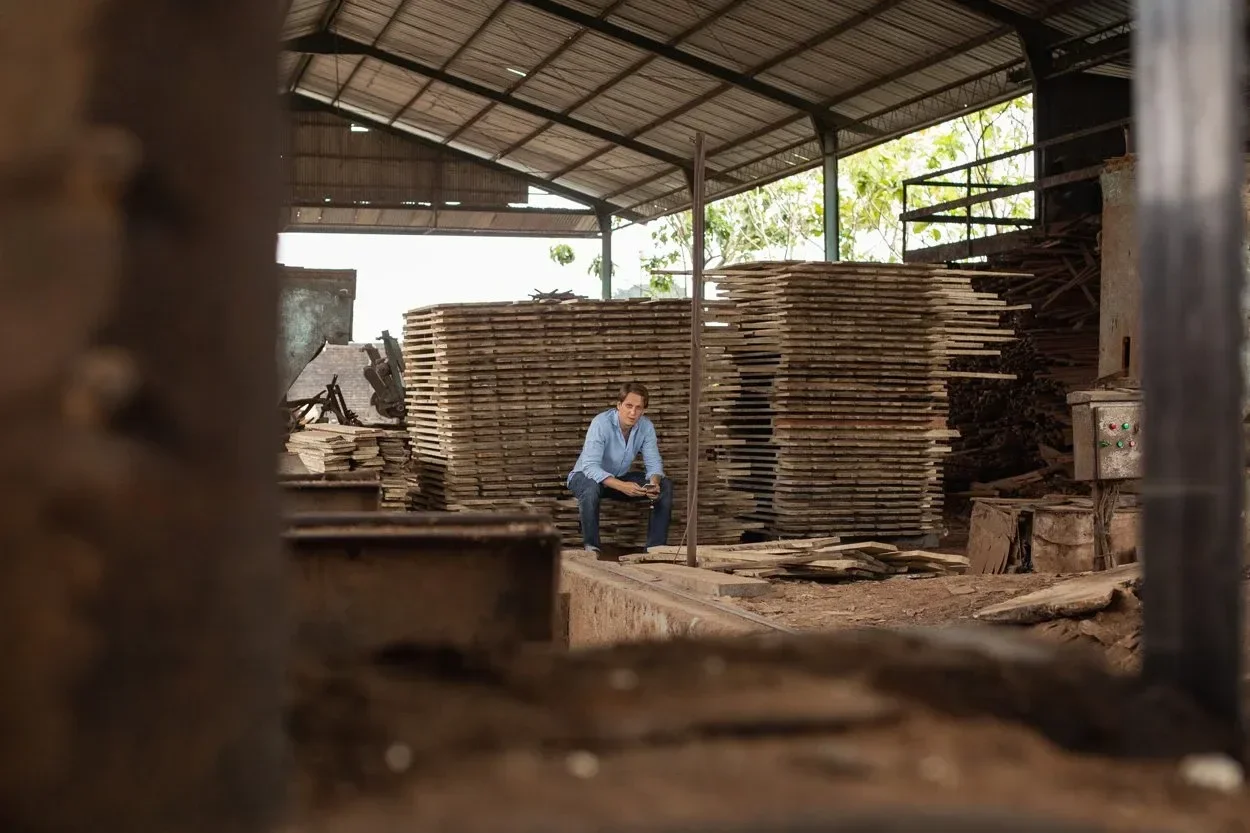
Rumah Hujan was not designed to impress. It was designed to disappear — into the volcanic stone it is built from, into the reclaimed timber that carries the memory of Borneo bridges and old Java, into the jungle that fills every room with something that cannot be manufactured.
“The view is your piece of art on the wall. The view is everything.”
The master bedroom of Rumah Hujan I is almost entirely glass — a deliberate choice, so that the boundary between sleeping and being in the jungle becomes, by night, impossible to locate. Rumah Hujan II is anchored by a reclaimed Javanese Joglo, its soaring timber roof rising nearly thirty feet — a structure that understands stillness in a way that only centuries of craft can teach. Every material here has history. Every space has been considered not for how it looks, but for how it feels to be inside it.
The estate is the work of Maximilian Jencquel of Studio Jencquel — born in Venezuela, trained in Paris under Christian Liaigre, and drawn to Ubud by the same pull that has brought artists and architects to this valley for generations. Rumah Hujan was his first build — not a commission, but a passion project. A family home, poured into the land stone by stone, with a team of Balinese master carpenters whose craft shaped everything you see. The bamboo pavilion was conceived in collaboration with Ibuku — the studio behind Bali’s iconic Green School — its curved shell form derived from the trajectory of a shuttlecock in flight, a geometry that is both entirely rational and entirely beautiful. The result is a property that does not feel designed so much as discovered.