

A Yoga and Wellness Retreat, Without Leaving the Villa
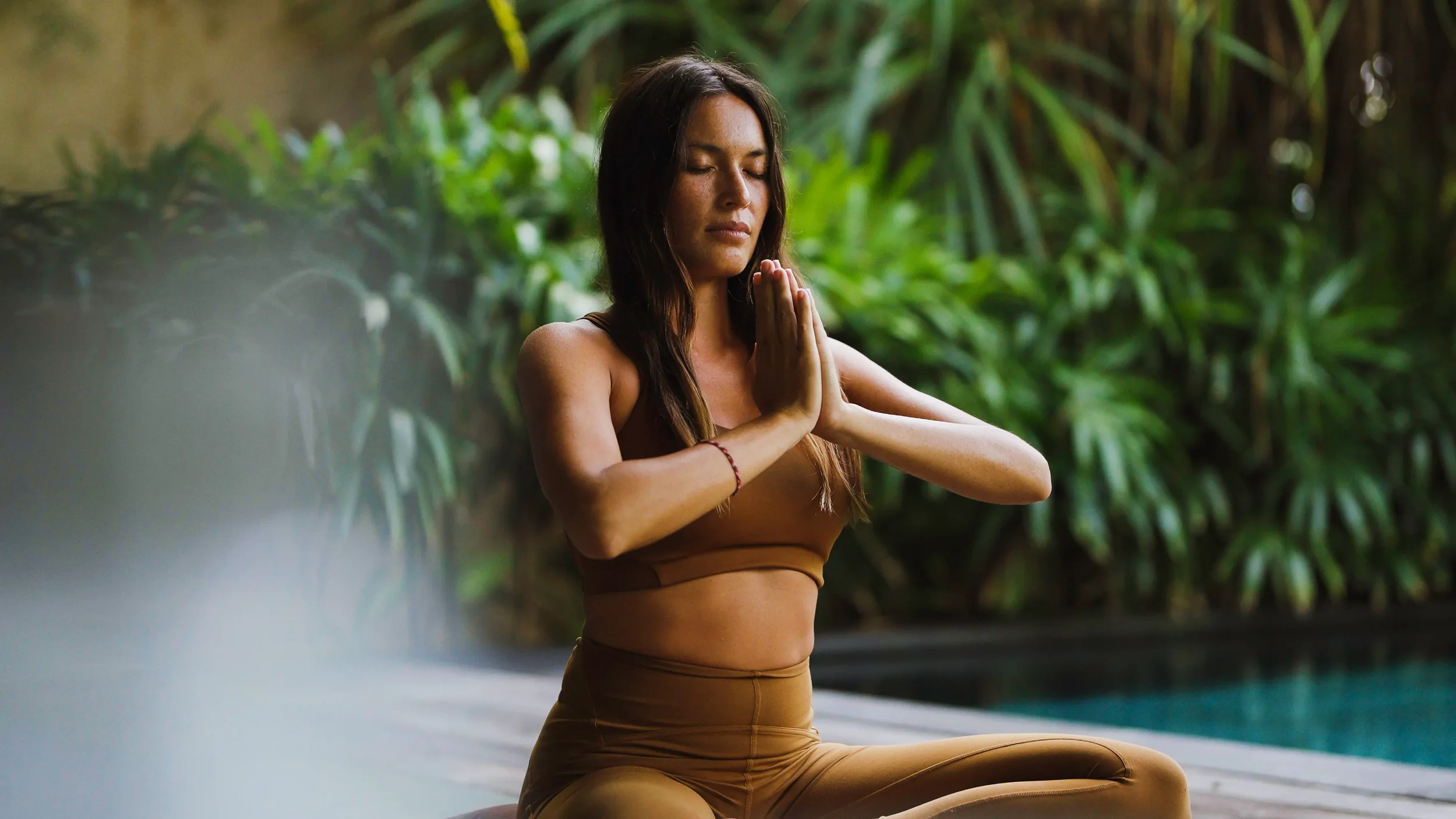
There is no spa building at Rumah Hujan, no treatment menu laminated by the pool. Wellness here is arranged the way everything else at the estate is arranged — quietly, and around you, rather than the other way around.
Practice, in place
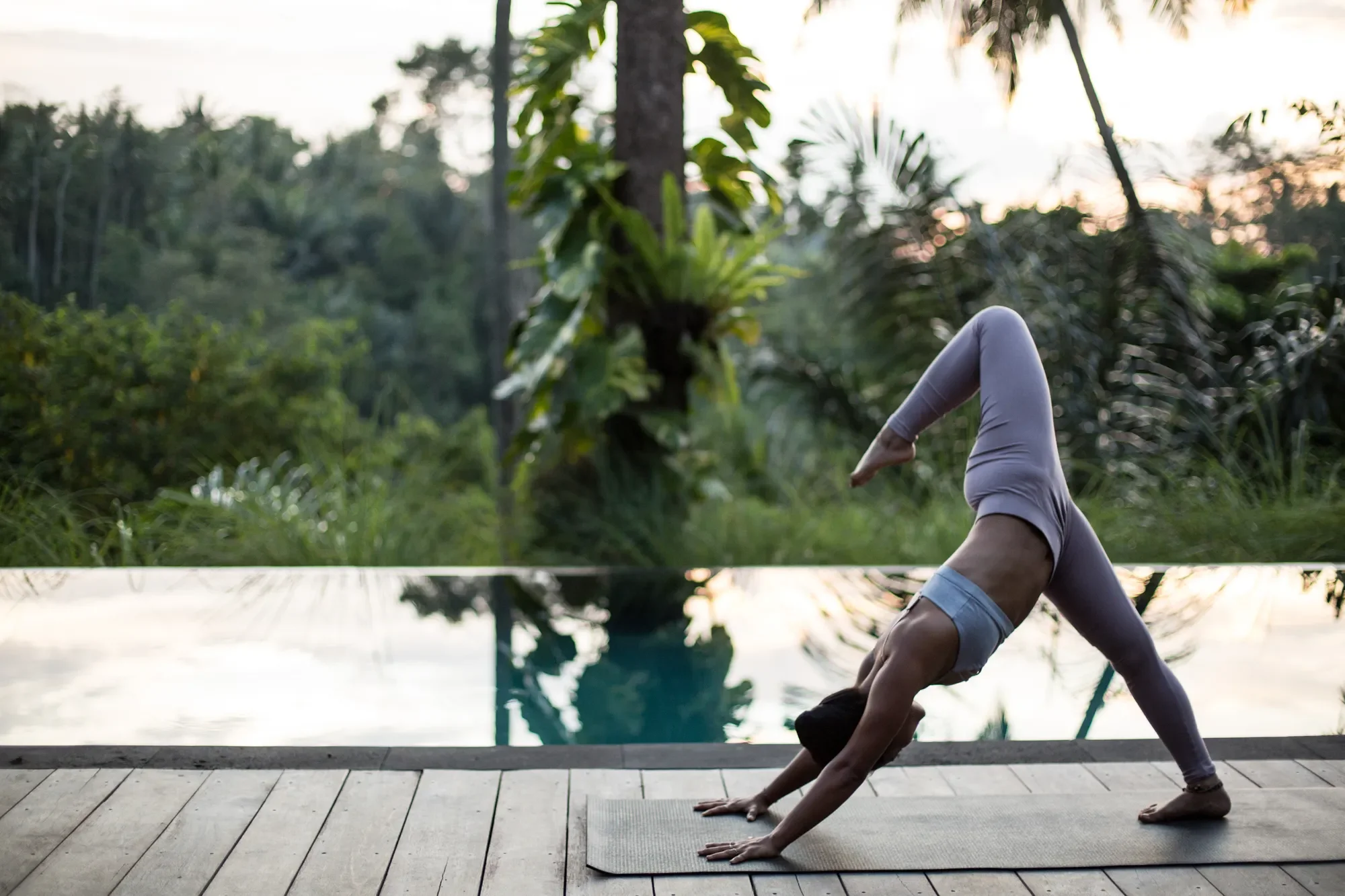
Bali's long history as a centre for spiritual practice has made Ubud one of the most established towns in the world for yoga, and that reputation runs deeper than the studios along its main roads. At Rumah Hujan, that practice happens in the garden, on the terrace, or beside one of the two heated saltwater pools — wherever the morning light falls best that day. A private instructor can be arranged for either villa, working around your own pace rather than a class schedule. There is no set sequence to follow, no group to keep up with. Some mornings that means an hour of practice; others, ten minutes before coffee.
Bodywork, brought to the house
Massage therapists visit the villa rather than the other way round, which changes the experience more than it might sound. A treatment after a day exploring Campuhan Ridge or the river Wos doesn't require a transfer or a waiting room — it happens on your own terrace, with the same jungle view you've had all day. Rumah Hujan's full-time team can arrange this alongside swimming coaching, badminton sessions in the bamboo pavilion, or simply more quiet.
The products used throughout the villas are chosen with the same restraint as the architecture. Utama Spice's natural aromatherapy oils, made by a small, mostly female team based in Ubud, draw on traditional Balinese herbal knowledge. Sensatia Botanicals, which grew out of a fishing village on the island, supplies the raw, cruelty-free ingredients used in the outdoor showers. And the scent that runs through both villas — Ilin Beraroma, or Night Rain — was developed with the Balinese house Republic of Soap, built from night-blooming jasmine grown on the property itself, layered with magnolia and sandalwood.
A house designed for stillness
Studio Jencquel, the architecture practice behind Rumah Hujan and based on the estate itself, works from principles of slow design — building with what's already there rather than against it. It shows in small ways that matter to a wellness-minded stay: glass-walled bedrooms that blur the line between sleeping indoors and out, terraces angled toward the jungle valley rather than the path, gardens treated as another room of the house. None of it was designed as a "wellness feature." It simply makes slowing down the easier option.
One day, loosely held
A guest might begin with yoga on the lawn as the mist over the valley lifts, swim before the heat sets in, then spend the afternoon with a masseuse on the terrace or a quiet hour reading by the pool. Dinner is whatever the private cook has planned that day. None of this is scheduled by the estate — it's simply what tends to happen when a home is built around privacy, nature, and your own rhythm rather than someone else's itinerary.